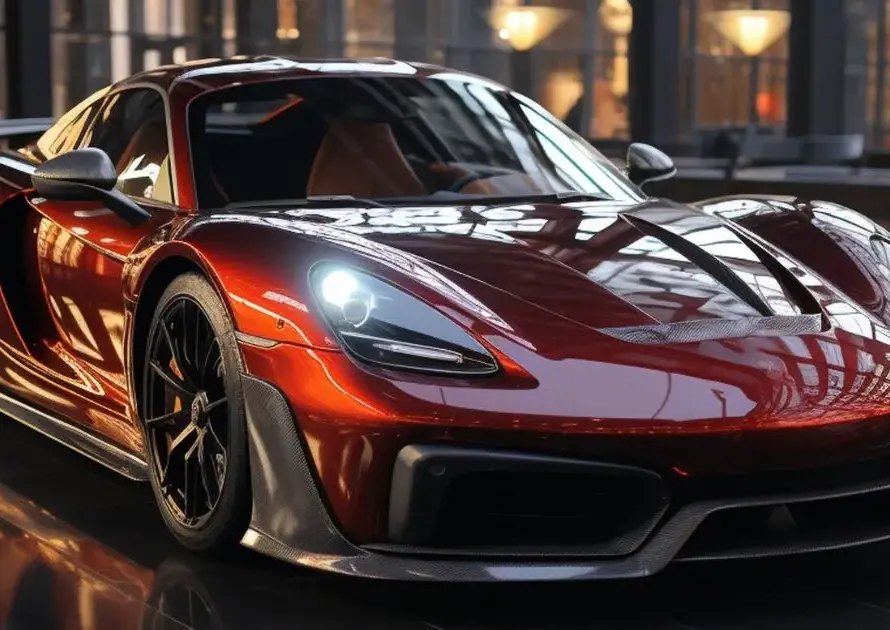
You love cars as a driver. The flawless paint job is your ultimate goal when it comes to automobiles. However, regular driving exposes your car to various risks. UV rays, road debris, and scrapes that eventually erode the paint. Here, PPF coating for a car comes into play. PPF is a thin, clear, and durable film that is applied to the paint surfaces of cars to protect the underlying paint.
Insect streaks, pebble chips, and scratches from tiny particles. These are just a few of the mishaps that paint protection film effectively guards against. The best thing about this particular film is that it can self-heal. This means that heat will make even tiny scratches and swirl marks disappear. PPF comes in thicknesses of 6 to 12 mil. The 8 mil is the most commonly utilized. Its thickness determines how effective it is at preventing damage to auto paint. The thicker films may be more challenging to install because more skill is needed to create a smooth, non-porous application surface, even though they are more flexible in terms of impact resistance.
Types of PPF
Before you begin to search for “PPF installation near me”, read this article as your concise guide.
Thermoplastic Polyurethane or TPU
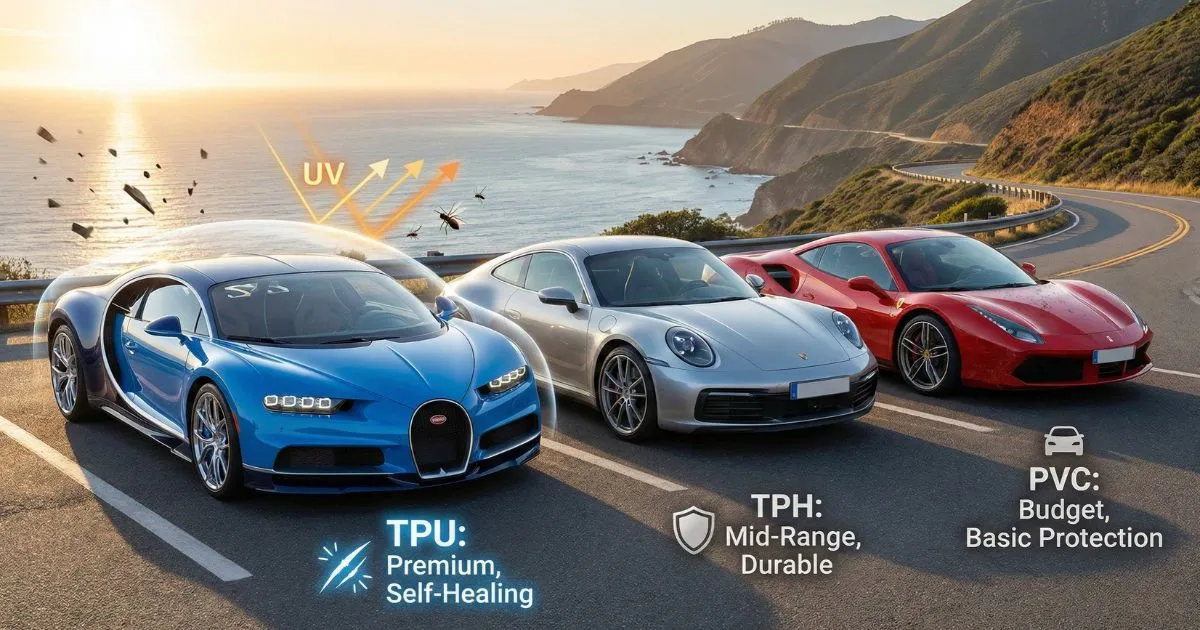
For consumers who are concerned about quality, this is your best pick. Thermoplastic polyurethane (TPU) is the wisest choice among paint protection films. Once applied, it is nearly undetectable and has outstanding optical clarity. Its durability makes it appealing for a long time. Flexible TPU can completely shield curved surfaces from bubbles and creases. One thing to keep in mind is that, for TPU paint protection film to function better, it must have good stain resistance. It does not deteriorate over time. Hence, it does not endanger the appearance of your beloved car. TPU is very appealing due to its self-healing technology. This eliminates tiny nicks and swirls caused by heat, such as sunlight or vehicle engine heat. If you are looking for the best PPF coating for a car, this is a good choice.
Thermoplastic Polyolefin or TPH
The advantageous qualities of both polyurethane and PVC are combined in thermoplastic polyolefin (TPH). It is a hybrid material that offers a mid-range price and functionality. If you are searching for “PPF installation near me”, this might be your most economical choice. TPH is less expensive than TPU. It also offers benefits over PVC that are useful for car owners who want to protect their vehicles effectively without spending a lot of money. It is made to withstand common scratches and environmental factors as much as possible. Although TPH film has good durability, it does not have the same self-repair capacity as TPU. This is a drawback for some individuals seeking maintenance-free property.
Polyvinyl Chloride or PVC
Polyvinyl chloride (PVC) is the least expensive type of PPF; car owners on a tight budget can use it. It offers basic protection, keeping the paint free of small stains and scratches. However, it does not have the added benefits of the more costly alternatives. This can make fitting difficult due to its rigidity, especially on cars with complex curves that result in an uneven fit.
Conclusion
If you are looking for the best PPF coating for a car, Intakt is your top solution. Be it TPU, TPH, or PVC, they are your one-stop solution for the best in the market.